

Hi! I’m Peter, CEO of Kickresume, and these career-related stories caught my attention this month — and might catch yours too.
Today’s story: You may be posing a big threat to your company's cybersecurity.
Handpicked remote job paying in $$$: Remote Head of Sales at Toggl (Base pay: $75k—$99k)
Random piece of career advice that actually works: How to answer “What are your salary expectations?”

Ever been to a party where you were asked to BYOB (Bring Your Own Beverage)?
Well, what if I told you there’s a bizarre 2024 version of that—BYOAI.
Yes, “bring your own AI” is now a thing.
And get this: you’re probably already doing it while posing a big threat to your company’s cybersecurity.
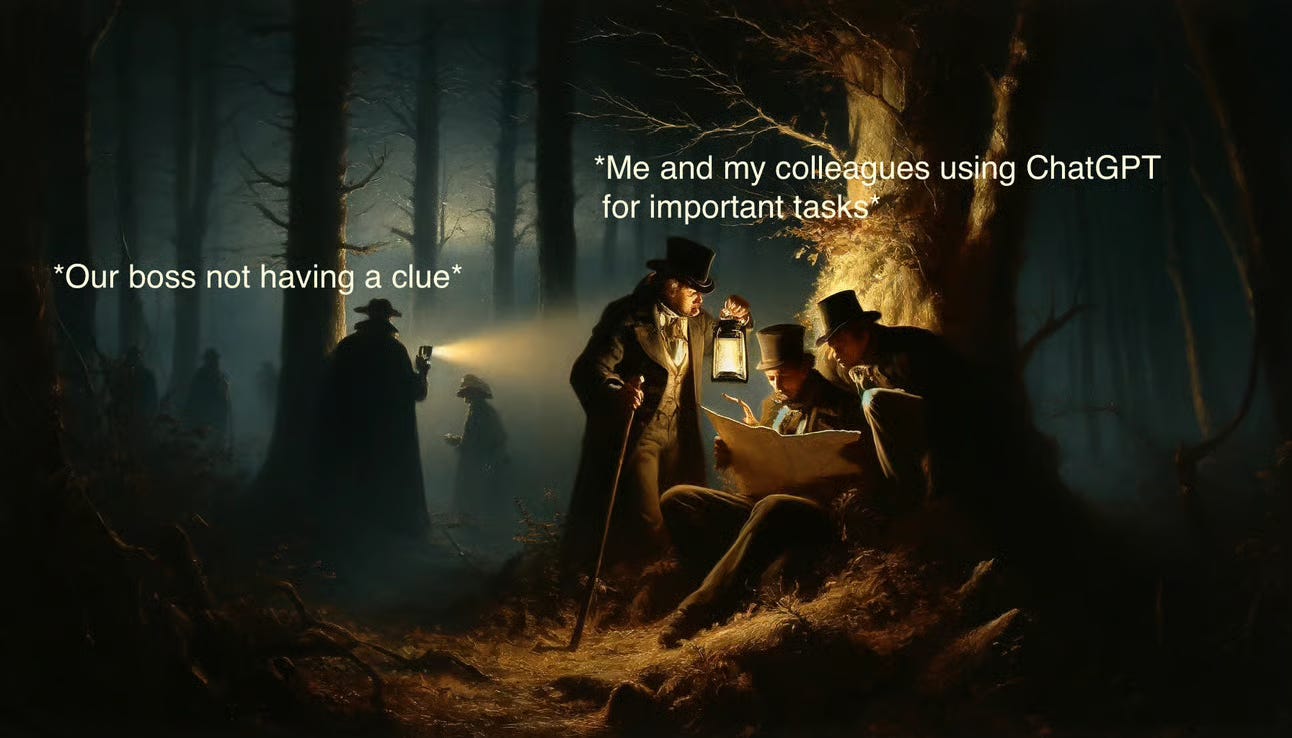
Funny how nobody wants anybody to know they’re using AI
Recently I stumbled upon a new Microsoft survey with a very intriguing headline: “AI at Work Is Here. Now Comes the Hard Part.”
It blew my mind.
Apparently, 75% of office workers are using AI tools. That’s not the shocking part, btw.
What did strike me is that the majority of workers (52%) actually hide the fact from their employers.
Why? Because 53% of these employees worry that using AI for important tasks makes them look replaceable.
I mean, I can understand why so many people may feel this way. After all, using AI can sometimes feel like cheating…
But it also helps you get more done! And that’s a win in my book.
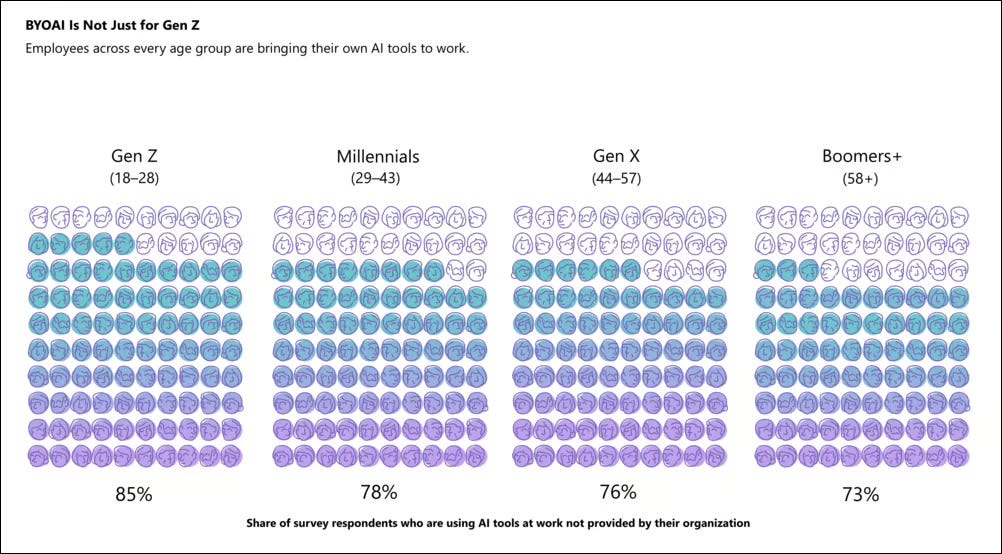
That’s why I find it weird that 78% of people reported having to bring their own AI tools to work.
Not only is it unfair, it’s also...a bit of a problem.
You’re a bit of a hacker, aren’t you?
So, why is BYOAI a problem?
For starters, it ties into something called shadow IT—the use of tech tools without the IT department’s knowledge. This isn’t a new term; it was coined back in 2009.
Both BYOAI and shadow IT can create serious cybersecurity risks ...and even get you fired as a result.
I’ll give you some very common examples.
Imagine using an AI tool to take notes during a meeting, something many people do. Sometimes, you might even forget to turn the AI off during confidential discussions.
The data gets uploaded to the AI tool, which might not have the necessary security measures.
And let’s be honest, you probably didn’t read the terms and conditions either.
That means that your sensitive information is now exposed or even used for training new models.
Or think about using ChatGPT to help you analyze data (some of which may include personal information of your clients or partners). Now, OpenAI has access to these data, without their consent.
Privacy breach alert!
Or maybe you asked ChatGPT to help you schedule tasks, give a second opinion on your business strategy, or simply to write emails for you.
All without considering aaaaall the data it collects about your company.
Plus, when employees use their own AI tools, the IT department loses control and visibility over the tech being used.
This can create a messy situation with security gaps and potential data leaks.
Maybe it should be called “shady IT” instead.
Grab the elephant and toss it out of the room
Normally, I’d say “To hell with it! Without risk, there is no reward”. But you can’t really say that when cybersecurity is involved. Fortunately, I think that when it comes to AI, these risks can be mitigated.
It just takes a bit of good old transparent communication.
I encourage my employees to use AI whenever it can make their life easier.
We already had an open discussion about what type of data should and shouldn’t be shared with AI.
It’s not that hard. It only took one short workshop for everybody to understand.
Maybe drop a hint to your boss about doing something similar…
PS: And seriously, let’s not make anyone feel like they’re replaceable.
AI is too untrustworthy to replace you, so better stay trustworthy and don’t create security risks.

Handpicked remote job of the month
Remote Head of Sales at Toggl
💰$75k—$99k annual US base range 💰

Random piece of career advice
How to answer the classic interview question “What are your salary expectations?”
Asking for too little may be robbing yourself, while asking for too much can cause you to not get a call back.
So, to give you a chance to prepare your answer with confidence, here are 4 strategies you can apply in different scenarios:
Answer by providing a salary range that spans approximately 10% to 20%
Flip the question back to the recruiters
Delay answering the question until later stages of the job interview
Give a specific number during the final salary negotiations
Or you can try combining these.
Not sure how? Check out example answers for each strategy on our blog.

I’ll catch you later!
Peter